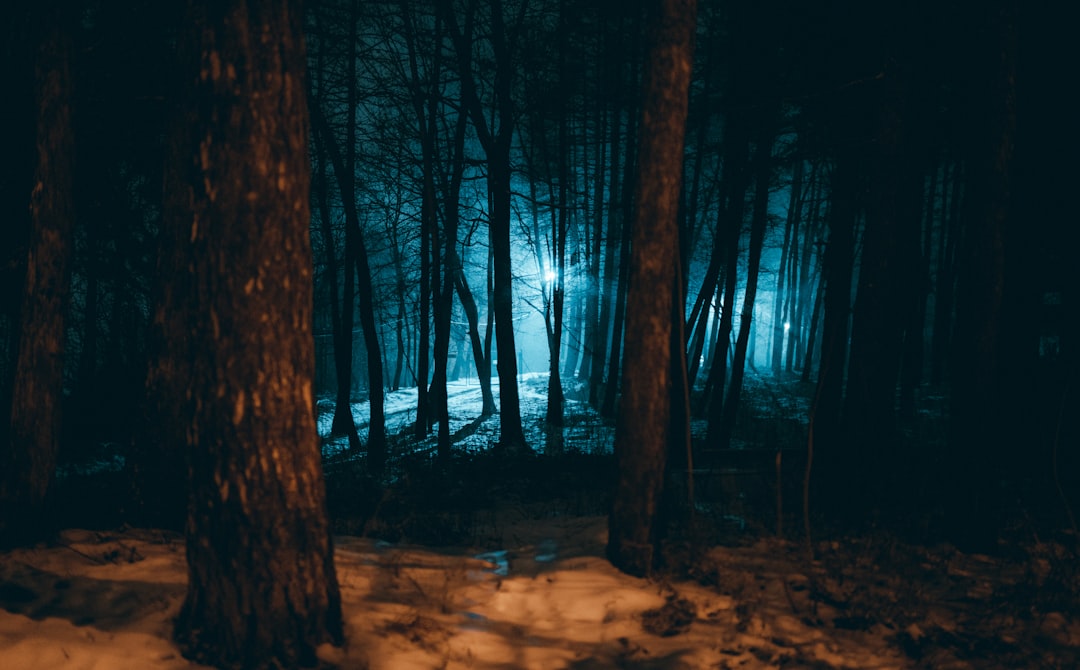
Forest Bathing: The Japanese Practice That Drops Cortisol, Boosts Your Immune System, and Resets the Male Mind
Most men hear "forest bathing" and immediately picture someone hugging a tree. That's the wrong image. No candles. No guided meditation. You just walk into the woods and stop rushing. That's it. And the science behind what that does to your body is harder to dismiss than the name suggests.
What Shinrin-Yoku Actually Is
Japan formalized this practice in 1982. The Japanese Ministry of Agriculture, Forestry and Fisheries coined the term shinrin-yoku, which translates literally to "taking in the forest atmosphere." They didn't create it out of philosophical interest. They created it because Japanese white-collar workers were collapsing under stress, and they needed a scalable, evidence-based counter.
The researchers they put on it weren't spiritual practitioners. They were immunologists and endocrinologists. What they found changed the way Japan thinks about preventive medicine, and it should change how you think about what counts as a useful hour.
The practice is simple: enter a forest, turn off the phone, slow your pace, and let your senses engage the environment. No destination. No pace goal. No headphones. You're not hiking to a summit. You're walking into a sensory environment that your nervous system has been calibrated for over 300,000 years of human evolution and getting out of your own way long enough for it to do its job.
The Physiology Is Real
Dr. Qing Li, a researcher at Nippon Medical School in Tokyo, spent over two decades running controlled studies on forest bathing. The numbers are specific enough to take seriously.
A single two-hour walk in a forest drops salivary cortisol by an average of 13%. Blood pressure falls. Heart rate variability, a reliable marker of parasympathetic (rest-and-repair) nervous system tone, improves. Urinary adrenaline and noradrenaline both decrease. Your body physically shifts out of threat mode.
The immune data is where it gets more interesting. Forests produce phytoncides, airborne chemical compounds trees release as a natural defense against pathogens and insects. When you breathe forest air, you're absorbing these compounds. Li's research showed that a three-day, two-night forest trip increased natural killer (NK) cell activity by over 50%, and that the effect lasted for more than 30 days after the trip. NK cells are the immune system's frontline responders against viral infections and tumor cells. A 50% increase from walking in the woods is not a small number.
A single overnight trip in the forest, Li found, produced NK cell increases that persisted for a full month afterward. A city walk produced no measurable immune effect.The attention restoration theory, developed by Rachel and Stephen Kaplan at the University of Michigan in the 1980s, offers the cognitive explanation. City environments demand what they call directed attention, the effortful focus required to navigate traffic, process information, and respond to social cues. That system fatigues. Natural environments engage what the Kaplans call fascination: low-effort, involuntary attention that allows the directed-attention system to recover. Trees, water, sky, the movement of birds. Your brain watches these things without trying to, and the prefrontal cortex gets a genuine break.
What It Costs You (Nothing) vs. What Chronic Cortisol Costs You (Everything)
Here's the practical problem men don't take seriously enough. Elevated cortisol is not just stress. It's a hormonal cascade with downstream effects on everything you care about. Chronic cortisol suppresses testosterone production. It degrades sleep architecture by blunting the natural cortisol dip that precedes deep sleep. It increases inflammatory cytokines that accelerate aging and slow recovery. It blunts dopamine sensitivity, making everything feel less rewarding and harder to motivate for.
You can spend serious money on testosterone support protocols, sleep optimization gadgets, and anti-inflammatory supplements. Or you can walk into the woods for two hours and get measurable cortisol reduction for free. Both are valid. But ignoring the second while chasing the first is not efficiency. It's avoidance.
The men who feel like they can't afford two hours in the woods are often the men who most need it. That's not an accusation. It's a pattern worth examining.
Why Men Resist This
The resistance is worth naming because it's real and mostly unconscious.
Nature immersion doesn't feel productive. There's no metric at the end of it, no PR broken, no task completed. The masculine default is to treat unstructured time as wasted time, and a slow walk in the forest, with no destination and no output, runs against every conditioning most men have absorbed about what effort looks like.
There's also the cultural framing. Anything associated with softness gets dismissed before it gets evaluated. "Forest bathing" sounds soft. But the men who dismiss it are still running elevated cortisol, suppressed immunity, and degraded sleep. The label is doing more work than the evidence.
Marcus Aurelius kept journals. He retreated into internal quiet. Thoreau went to Walden on purpose. Theodore Roosevelt took wilderness trips during the most demanding years of his presidency and said they were essential to his capacity to function. These men weren't soft. They understood that restoration is not the opposite of performance. It's the foundation of it.
The Protocol
You don't need a national forest. Any green space with enough density to reduce ambient noise and block the visual field of buildings will produce partial benefits. But the more immersive the environment, the stronger the effect. Dense tree cover, running water, birdsong, natural light filtering through canopy. These are the variables that light up the restoration response.
The basics:- Leave the phone. Not on silent. Leave it. The parasympathetic shift doesn't compete well with ambient notifications.
- Go slow. This is not a workout. Pace should be a third of your normal walking speed. You're not going anywhere.
- Use all five senses deliberately. Touch the bark of a tree. Listen past the obvious sounds for what's underneath. Smell the air. Look up.
- Two hours is the minimum threshold for the cortisol and NK cell effects Li measured. Forty-five minutes produces mood improvement but not the deeper immune and endocrine shifts.
- Monthly is better than nothing. Weekly is transformative. The NK cell data suggests monthly trips are enough to keep baseline immune function elevated. Weekly exposure changes the baseline nervous system state.
If you can manage a quarterly overnight, the compounding effect on immunity, sleep quality, and baseline mood is significant. You don't need gear. You need a sleeping bag, a tarp, and willingness to be offline for 24 hours.
Your Move
Pick a location. Somewhere with actual tree cover, not a city park with a few oaks. Find a two-hour window this week, not this month. Go without the phone. Go slow. Pay attention to your body when you come back out.
You'll likely notice quieter mental traffic, a physical sense of ease, and better sleep that night. That's not placebo. That's 300,000 years of nervous system design responding to the environment it was built for.
The forest doesn't care whether you believe in it. It works anyway.