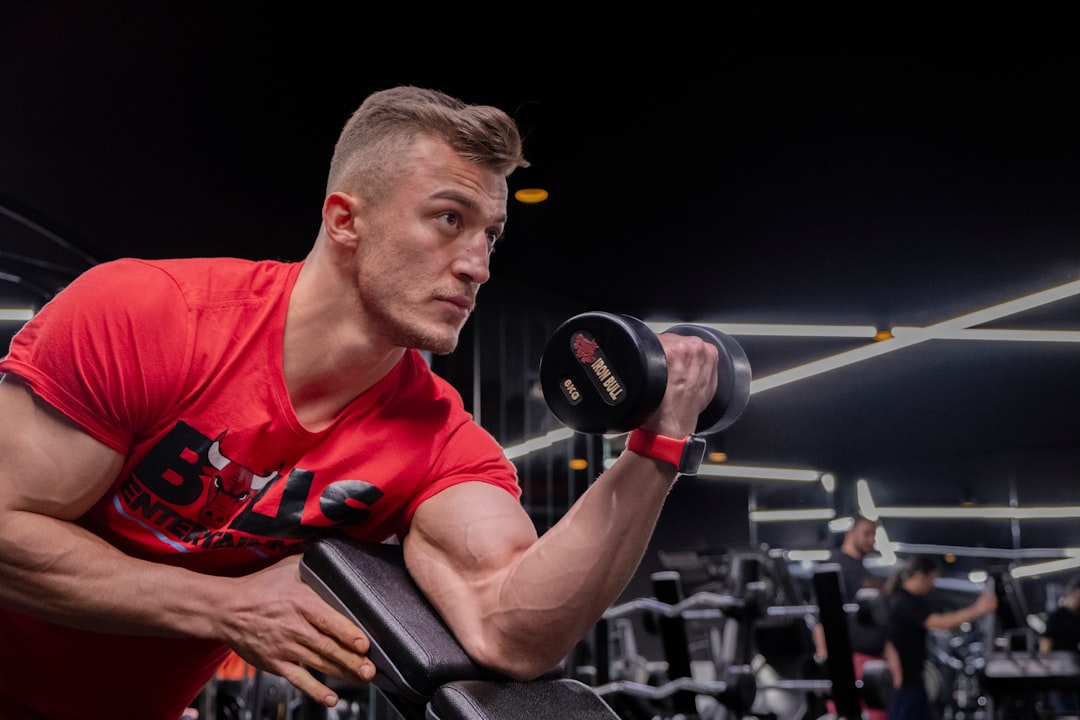
HRV: The Number That Tells You When to Push and When to Back Off
Your heart doesn't beat like a metronome. It shouldn't. The variation between beats is a signal, and most men are completely ignoring it.
Heart Rate Variability (HRV) is the time difference between consecutive heartbeats. When you're recovered, well-slept, and operating at full capacity, those intervals vary more. When you're fried, overworked, or quietly getting sick, they tighten up. A high HRV means your body is ready. A low one is a warning. It's your nervous system reporting in, whether you're listening or not.
What HRV Is Actually Measuring
Your autonomic nervous system runs two modes. Sympathetic (fight-or-flight) and parasympathetic (rest and recover). You want both. You need both. But the ratio matters enormously.
When sympathetic tone is high, your heart rate becomes more rigid. The body is primed to react. That's useful in the short term. When you're parasympathetic-dominant, your heart rhythm loosens. Beat gaps vary more. That variation is a sign the body has processed stress and is ready to absorb new training.
Low HRV doesn't mean you're about to die. It means you haven't recovered from the last hit yet. Going hard anyway is what turns good training into a slow grind toward burnout or injury.
The metric most apps report is called RMSSD (root mean square of successive differences). You don't need to understand the math. Just know that your wearable is measuring how much the beat-to-beat intervals differ over a given window. Higher RMSSD = higher HRV = better recovery.
Why Your Number Means Less Than Your Trend
There's no universal "good" HRV. A 45-year-old who trains consistently might run at 55 ms. A deconditioned 25-year-old might sit at 30. Comparing your number to someone else's is mostly a waste of time.
What matters is your baseline. That's the personal benchmark built from consistent morning readings, before you check your phone, before caffeine, before you start stressing about the day. Garmin, Whoop, and Oura all establish this automatically over time. Elite HRV does it with just your phone and a cheap chest strap.
Once you have a baseline, the deviations become the data. A morning score 15-20% below your average is your body saying it's not ready. A score at or above trend means green light. That's the signal you act on, not the raw number.
What Tanks Your HRV Overnight
Most men blame hard training for low HRV. Training is rarely the culprit. These are:
Alcohol. Even two drinks suppress HRV for 24-48 hours. It blunts deep sleep and keeps sympathetic tone elevated. You'll see it the next morning in your numbers before you feel it in the gym. Poor sleep quality. Not just duration. Fragmented sleep, heat, blue light exposure before bed, eating late -- all of it pushes your body into shallow sleep stages where recovery can't happen. HRV crashes as a downstream consequence. Psychological stress. Work pressure, relationship tension, unresolved problems you're carrying. The body doesn't distinguish between emotional load and physical load. Stress is stress. Your nervous system tallies it all. High training volume without adequate recovery. If you're hammering intensity five or six days a week without letting the system reset, the HRV trend will slope downward over weeks. That's how overtraining actually shows up, before you feel it. Illness (even subclinical). Your HRV will drop before you register symptoms. This is one of the most useful applications of daily tracking: a sharp unexplained dip often means something's brewing. You can back off before it turns into a week off the gym.What Actually Moves the Number Up
Zone 2 cardio is the most reliable long-term HRV booster. Low-intensity aerobic work builds the parasympathetic engine. It's unglamorous. It works. Twenty to forty minutes, three to four times a week, at a pace where you could hold a full conversation.
Sleep quality beats sleep quantity. Eight hours of interrupted sleep is worse than six hours of deep, cool, dark, uninterrupted sleep. Get the fundamentals right and your HRV will reflect it within days.
Cold exposure has a direct effect. A cold shower or cold plunge taken in the morning activates the vagus nerve, the primary channel of parasympathetic activity. The vagal tone you build from consistent cold exposure shows up in your HRV over time.
Nasal breathing during training also matters. Breathing through your nose activates the diaphragm more fully, stimulates the vagus nerve, and shifts the body toward parasympathetic tone. Mouth breathing during moderate exercise keeps sympathetic activation higher than necessary. This is a small lever, but it's a real one.
How to Actually Use This
The mistake most men make is treating HRV as a curiosity. They check it, nod at the number, and train however they were already going to train. That's not using it. That's collecting data.
A practical protocol:
Measure every morning, same time, same position (lying down, before getting up). Use a consistent device. Let it build a 2-3 week baseline before you trust it.
If your score is at or above baseline, train hard. Heavy compound lifts, high-intensity work, whatever you have scheduled. Your body has the reserves.
If your score is 10-15% below baseline, train but pull back intensity. Keep the session, reduce the load. Maintenance work instead of progressive overload.
If your score is more than 20% below baseline, do active recovery or take it fully off. Walk, stretch, sleep more. Forcing a hard session on a depleted nervous system builds nothing.
Stick to the trend for decisions, not the single-day number. One bad morning doesn't tell you much. A week of suppressed scores tells you your recovery is broken.
Your Move
Download a free HRV app (Elite HRV, HRV4Training, or use whatever your wearable already collects). Measure every morning for the next three weeks. Don't change your training yet. Just observe.
Watch what happens to your numbers after a late night, after a heavy drinking session, after a brutal training week. After a good week of sleep and clean eating.
Once you see the pattern, you'll stop guessing. You'll know. And making decisions from data instead of ego is how you keep improving for years instead of spinning out for months.
Train smart. It lasts longer.