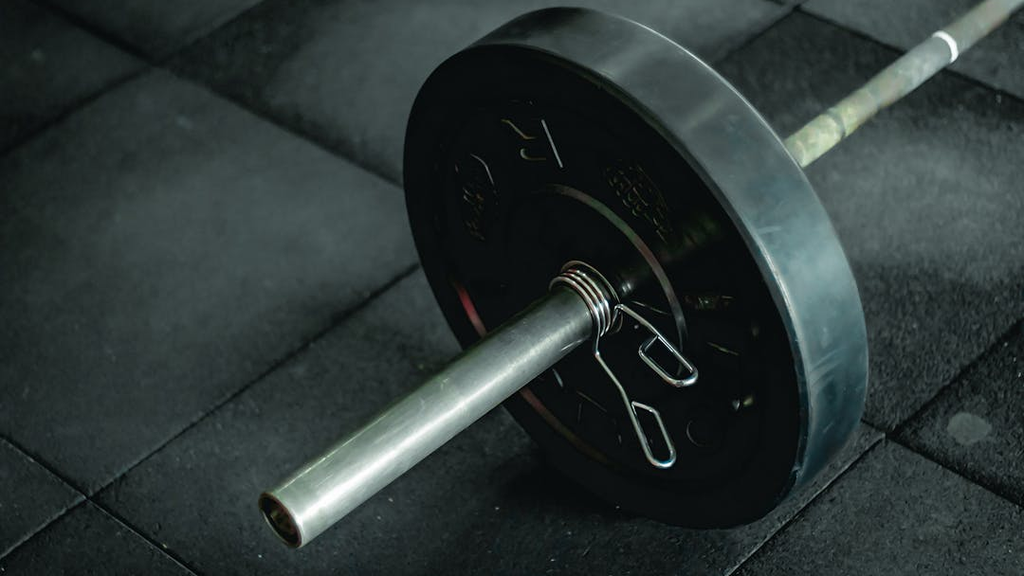
You walk up to the bar. The weight is loaded. You know the set calls for ten. The first three reps feel mechanical — almost easy. The middle four are work, but manageable. And then you hit rep eight. Your muscles are screaming. Your brain starts negotiating. "Eight is close enough to ten. No one's counting. You already trained hard this week."
That voice is the most important thing in the gym. Not the weight on the bar. Not the program. Not the protein shake. That voice — the one telling you to stop — is the threshold between the man you've been and the man you're becoming. And the only way through it is to finish the set.
THE BIOLOGY OF THE LAST REP
From a pure muscle-building perspective, the first several reps of a set are warm-up. They recruit the available motor units, establish the contraction pattern, and begin the metabolic process. But they don't trigger significant adaptation. Your muscles aren't being challenged beyond what they can already handle.
The last 2-3 reps of a hard set are where the actual signal happens. This is where maximum motor unit recruitment occurs — including the high-threshold motor units that govern your largest, strongest muscle fibers. These fibers only activate when the load demands it, typically within 2-3 reps of failure. A 2010 study in the Journal of Applied Physiology demonstrated that training to or near muscular failure produced significantly greater strength and hypertrophy gains than stopping well short of failure, even when total volume was equalized.
Translation: if your set of ten calls for hard reps at 8, 9, and 10, those are the reps building muscle. Everything before them was setup. The man who consistently stops at rep 7 because it's "uncomfortable" is leaving the majority of his results on the table.
PROGRESSIVE OVERLOAD ISN'T JUST PHYSICAL
Every serious lifter understands progressive overload — the principle that your body only adapts when the demand exceeds what it's accustomed to. Add weight. Add reps. Add sets. Increase the challenge over time, and the body responds by getting stronger. Stagnate, and it stops growing.
Most men apply this to their training but never to the rest of their lives. They lift progressively heavier weight but never have the harder conversation. They push through physical discomfort in the squat rack but avoid emotional discomfort in their relationships. They add plates to the bar but never add risk to their careers. The gym is supposed to be a training ground for the mind, not just the body. If you're only building muscle, you're using 10% of what training offers.
The weight doesn't care about your feelings. That's what makes it the best teacher you'll ever have.
THE GYM AS A MENTAL PROVING GROUND
There's a reason that men who train consistently tend to perform better across every area of life. It's not the muscles. It's not the testosterone boost (though that helps). It's the daily practice of choosing discomfort when comfort is available. Every time you step under a heavy bar, you're practicing courage. Every time you finish a set your body wanted to quit, you're practicing discipline. Every time you show up on a day you don't feel like it, you're practicing consistency.
These aren't abstract virtues. They're skills. And like any skill, they transfer. The man who has practiced pushing through physical resistance develops a higher tolerance for pushing through professional resistance, emotional resistance, creative resistance. He's already proven to himself — hundreds of times — that he can handle discomfort and come out the other side. That proof of concept changes how he approaches everything.
THE CONVERSATION AT REP 8
Pay attention to what happens in your head at rep 8 of a hard set of 10. That internal dialogue is the most honest you'll be with yourself all day. The rationalizations. The excuses. The sudden discovery of urgent reasons to stop. "My form is breaking down." "I don't want to get injured." "I'll go heavier next time." Some of these are legitimate. Most aren't. You know the difference.
That same voice shows up everywhere else. "I should start that business, but the timing isn't right." "I should have that conversation, but it'll cause drama." "I should apply for that position, but I'm probably not qualified." Same voice. Same negotiation. Same outcome if you listen to it: nothing changes.
The gym gives you a controlled environment to practice overriding that voice. The stakes are low. The weight is manageable. The worst case is a missed rep. But the habit you build — the habit of pushing through when your brain says stop — that habit has unlimited upside.
COMFORT WITH DISCOMFORT
The men who achieve the most aren't the ones who figured out how to avoid discomfort. They're the ones who learned to sit in it. Who can hold an uncomfortable position — physically, financially, emotionally, socially — without flinching. The gym is where that tolerance is built, one set at a time.
The shaking on the last rep of a deadlift. The burn at the bottom of a wall sit. The breathlessness at the end of a sprint. These are all controlled doses of suffering. And every time you sit in them instead of quitting, you prove something to yourself that no affirmation, no podcast, no motivational quote can give you: evidence that you are the kind of man who doesn't quit when it gets hard.
That evidence compounds. After a hundred sessions of choosing the hard rep, you don't need to psych yourself up anymore. The choice becomes reflexive. Discomfort arrives, and you lean in instead of pulling back. Not because you're fearless, but because you've trained the response. You've done it enough times that it's wired in.
THE PARALLEL
The last rep is where the muscle grows. The hardest conversation is where the relationship grows. The scariest business decision is where the revenue grows. The most vulnerable moment is where trust grows. Every domain of life has its equivalent of rep 8, 9, and 10. The easy reps are prologue. The hard ones are the story.
Most men live in the first seven reps. They do enough to say they showed up. They stay in the comfortable range. They never push past the point where the voice starts negotiating. And they wonder why nothing changes year after year.
YOUR MOVE
Next time you're in the gym, don't change your program. Don't add weight. Don't try a new split. Just do one thing differently: on every working set, finish the reps. All of them. When your brain says "that's enough" at rep 8, do rep 9. When it says "seriously, stop" at rep 9, do rep 10. With control. With intent. And when you rack the weight, notice how you feel. Not in your muscles — in your chest. That's the feeling of proving something to yourself. Carry it out of the gym. Apply it to the next hard thing. That's the whole point.