The Circle: The Spiritual Technology Men Stopped Using (And Why That's Killing Them)
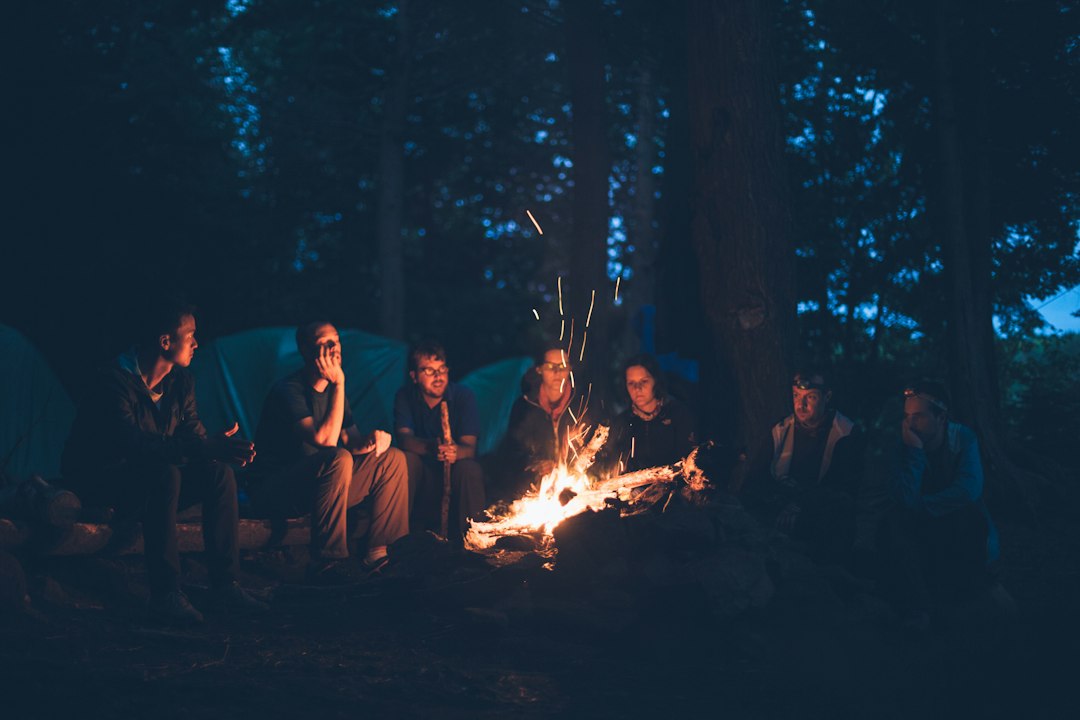
For most of human history, men didn't process life alone. They sat in circles. Around fires. After hunts, after battles, after funerals. They talked. They witnessed each other. They told the truth no one in the rest of their life would hear.
Then we got suburbs, desk jobs, and the unspoken agreement that real men figure things out on their own. And here we are: three out of every five men saying they have no close friends. The loneliness epidemic isn't a mental health crisis dressed up in statistics. It's a spiritual one.
What a Circle Actually Is
A men's circle isn't a support group. It's not therapy. It isn't church. It's something older than all of those things.
The structure is simple: men gather, usually weekly or monthly, in a small group of five to twelve. Someone holds the space. There are agreements -- confidentiality, no crosstalk, no advice-giving unless asked. Each man speaks from his own experience. Others witness without commentary.
That's it. No agenda. No fixing. No performance.
What happens inside that container is harder to explain. Men who have never cried in front of another person suddenly find themselves crying. Men carrying twenty-year grudges put them down. Men who had no idea they were depressed start naming what's actually going on. The circle doesn't do any of this. The circle just removes the conditions that prevent it.
Robert Bly, whose book Iron John touched off a whole wave of men's work in the early 1990s, called it "moistening the soul." The idea was that modern men are dried out by an absence of ritual, absence of initiation, absence of other men who will tell them the truth. The circle is one way to add water back.
Why You Don't Have This Already
Most men can't tell you when they last had a real conversation with another man. Not sports, not work, not mutual complaining. A real one. Where someone asked how you were actually doing and you answered honestly.
The default male friendship is side-by-side, not face-to-face. We watch the game together. We fish together. We shoot the shit. And there's real value in that. But it never goes deep enough to do what the circle does, which is to see another man clearly and be seen in return.
Part of this is conditioning. We grew up learning that vulnerability was risk. That naming your fears invited attack. That other men were competition before they were allies. The conditioning isn't wrong, exactly. In certain contexts it kept you safe. But you're no longer twelve, trying to survive the cafeteria. The strategy that protected you then is isolating you now.
Part of it is logistics. Life filled in. The rare college friendships that got close didn't survive geography, kids, careers. You never rebuilt what got lost because building it seemed optional. It wasn't.
The Research Is Not Subtle
A 2023 study in PLOS Medicine found that social isolation carries mortality risk comparable to smoking fifteen cigarettes a day. That's not metaphor. That's biology. Chronic loneliness keeps your nervous system in a low-grade threat response, elevating cortisol, suppressing testosterone, disrupting sleep, and accelerating cardiovascular aging.
Men's social networks shrink faster than women's after age thirty. By fifty, the average man has fewer than two people he considers close confidants, and at least one of those is his partner. Which means if the relationship ends, he has almost nothing.
The circle addresses this at the root. Not by manufacturing fake intimacy, but by creating the conditions where real intimacy becomes possible over time.
What Actually Happens to a Man in a Circle
The men who've done serious work in circles describe a few consistent shifts.
The performance comes down. In ordinary life, you're always playing a role -- the guy who has it together, the strong one, the provider, the competent one. In the circle, none of that is being evaluated. You can show up having had the worst week of your life and nobody's going to think less of you. In fact, the more honest you are about what's hard, the more the circle respects you. This is the opposite of almost every other context in a man's life. You stop being the expert on your own experience. Other men witness things you can't see from inside it. Not because they're smarter, but because they're outside looking in. "I noticed when you talked about your father, you smiled before you described how badly he hurt you." You didn't know you did that. Now you do. That's not therapy. That's just another man paying attention. You find out you're not the only one. The shame that drives male isolation works by convincing you that your struggle is uniquely pathetic. The drinking, the rage, the emotional shutdown, the inability to be present with your kids -- you think this is specific to you, your weakness, your failure. Then you sit in a room with ten other men and find out three of them are carrying the same thing. The shame loses power. What was personal becomes human.How to Find or Build One
The ManKind Project (mankindproject.org) has been running men's initiation weekends and ongoing circles since 1984. They have groups in most cities. The New Warriors training weekend is a real rite of passage, not a corporate retreat.
If you can't find a formal group, you can start one yourself. You need five men willing to show up consistently. You need agreements: what gets said here stays here, no advice unless asked, no fixing, speak from your own experience. You need someone to hold time and keep agreements. That's enough.
The first few meetings will probably feel awkward. Men aren't trained for this. Someone will make a joke when things get real. Someone will give advice when they were supposed to just listen. You work through it. The circle teaches itself as it goes.
Your Move
Name three men in your life you actually respect. Men you'd want to be honest around, and who might be honest around you.
Reach out to one of them this week. Not about anything in particular. Just to say: "I've been thinking about doing a regular thing with a few guys, something real, not just hanging out. You interested in talking about it?"
You don't have to call it a circle. You don't have to have a framework. You just have to crack the door.
Your ancestors would have called this ordinary. You've been told it's optional. It's not. The fire needs a circle of men around it. So does your life.