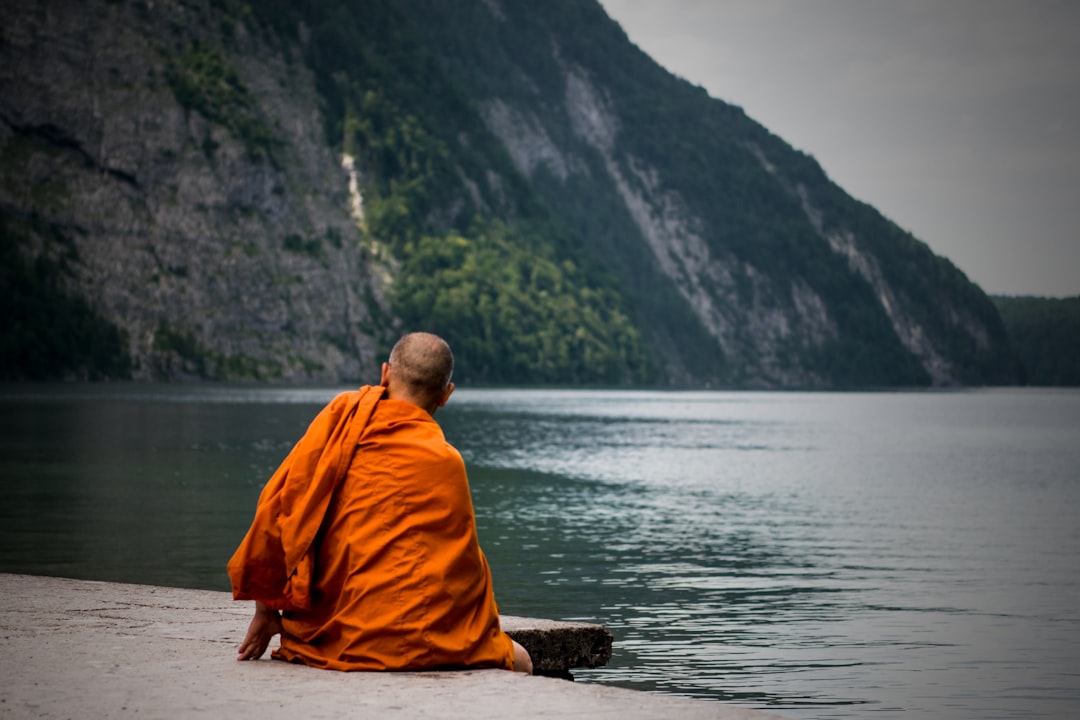
Monk Mode: The Art of Strategic Disappearance
Most men are available all the time. Notifications, DMs, group chats, calls, drop-ins. They're responsive, connected, accessible — and completely stuck.
The men who build things, finish things, and get ahead have learned a different skill: disappearing on purpose.
That's monk mode. Not a gimmick. Not a 30-day trend. A deliberate operating mode where you cut everything non-essential and give all your cognitive energy to one thing. The monks figured this out centuries ago. The science caught up recently. The execution is available to you right now.
---
What Monk Mode Actually Is
Monk mode is a period — hours, days, or weeks — where you deliberately withdraw from the noise of regular life to focus on a single high-value goal. You eliminate social commitments, cut entertainment, reduce decision-making, and protect your most productive hours like they're sacred.
Cal Newport calls the underlying practice "deep work" — cognitively demanding work performed in a state of distraction-free concentration. In his research, he found that the ability to focus deeply is one of the most valuable and increasingly rare skills in modern knowledge work. Most people can't do it anymore. Their attention has been sliced into fragments.
Monk mode is deep work with the dial turned all the way up.
You're not just blocking your calendar. You're restructuring your environment, your inputs, your habits — everything — around the output you want to produce.
---
The Science of Why It Works
Your brain operates on ultradian rhythms — roughly 90-minute cycles of high and low alertness throughout the day. Nathaniel Kleitman, the sleep researcher who discovered REM sleep, identified these cycles. During peak phases, your prefrontal cortex — the part responsible for focus, creativity, and complex problem-solving — is firing at full capacity.
When you fragment that window with a text notification, a quick scroll, or a two-minute check of your inbox, you don't just lose two minutes. Research from Gloria Mark at UC Irvine found that it takes an average of 23 minutes to fully recover your focus after an interruption. Most men interrupt themselves dozens of times a day and wonder why they feel busy but aren't making progress.
Monk mode aligns your work with your biology. You protect those 90-minute windows. You let the cycle complete. You go deep instead of wide.
There's also a neurochemical component. Sustained, focused effort triggers dopamine release tied to mastery and completion — not the cheap, hollow dopamine from social media. Deep work feels different afterward. You feel accomplished, not drained.
---
Why Most Men Can't Enter It
The obstacles aren't technical. They're psychological.
The availability trap. We've conflated being reachable with being responsible. If you don't respond to a text within an hour, something must be wrong. This is a lie sold to you by the attention economy. Most messages that feel urgent aren't. Fear of what the silence reveals. Busyness is comfortable because it gives you an excuse. If you're always occupied, you never have to face whether you're actually working on the right things. Monk mode strips that away. You sit down with your real work and your real capacity, and you find out what you're made of. Addiction to stimulation. After years of constant input, stillness feels like deprivation. Your brain craves the variable reward loop of notifications and feeds. Sitting with one task — no tabs, no music, no background noise — can feel genuinely uncomfortable at first. That discomfort is the withdrawal. It passes. What's on the other side is rare.---
How to Actually Do It
You don't need a cabin in the woods. You need structure and commitment.
Set the container. Decide the duration upfront. A monk mode session can be 90 minutes, a full morning, a weekend, or 30 days. Start with 90-minute blocks if you've never done extended deep work. Know what you're protecting the time for before you start. Define your one thing. Monk mode without a clear objective is just isolation. What is the one deliverable, project, or skill you're advancing? Write it down. Post it where you can see it. Eliminate inputs. Phone on airplane mode or in another room. Notifications off at the OS level — not silenced, off. Browser extensions like Freedom or Cold Turkey blocking every distracting site. No music with lyrics (instrumental or silence only). Close every tab except what you need. Protect your environment. If people can interrupt you, they will. Close your door. Put on headphones even if you're not listening to anything — it signals "do not disturb" universally. Have water nearby so you don't need to break focus for a trip to the kitchen. Give your brain a shutdown ritual. At the end of each session, write down exactly where you stopped and the next three micro-tasks for when you return. This "closure" reduces cognitive residue — the background processing that leaks focus when you leave work open-ended. Stack two or three blocks per day. One 90-minute block in the morning before anyone else is awake. One mid-morning before email. If you can protect those two blocks, you'll accomplish more real work than most people do in a week.---
Monk Mode for a Season
Some men take it further. Monk mode for 30 or 90 days — eliminating alcohol, social commitments, dating apps, social media, TV. They redirect everything into a single pursuit: launching a business, writing a book, transforming their body, building a skill.
The results tend to be disproportionate. Not because 30 days is magical, but because sustained singular focus compounds differently than scattered effort. You develop momentum. You eliminate the context-switching tax. Your subconscious keeps working on the problem even when you're not consciously at the desk.
This is why monks throughout history — Christian, Buddhist, Sufi — built their lives around structured withdrawal. Not because the world doesn't matter, but because you can't give the world your best work if you never develop it in stillness first.
---
Your Move
Start with one block. Tomorrow morning, before you check your phone or open your email, close your door, put everything else away, and spend 90 minutes on the most important thing on your plate.
That's it. No grand proclamation. No 30-day commitment. Just 90 minutes of real work before the world gets its hooks in you.
Do it three days in a row and see how it changes your relationship to time, output, and what you're actually capable of.
The men who move fast aren't doing more things. They're doing fewer things, better, with full attention.
Disappear for a while. Come back with something to show.