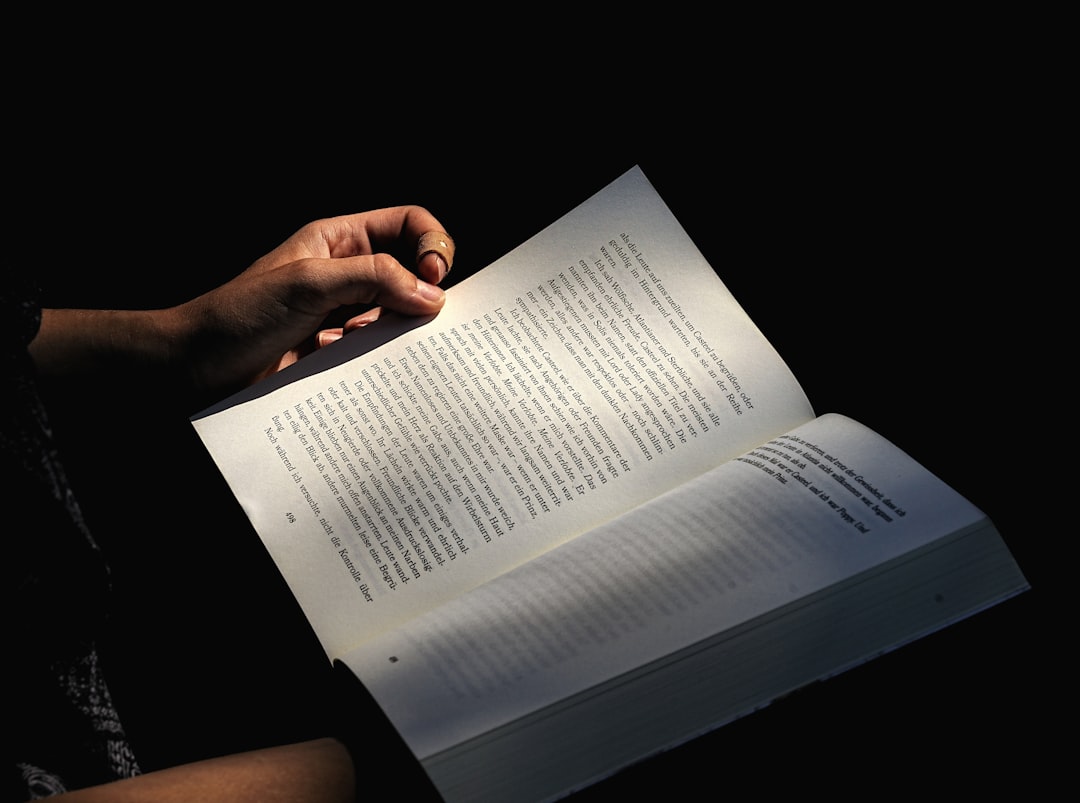
You're Reading Wrong: How to Actually Absorb What You Read
You've read the books. Maybe dozens of them. Self-help, finance, history, philosophy. You highlighted passages, felt fired up on the last page, and then two weeks later you couldn't tell someone what the book was about if your life depended on it.
That's not a memory problem. It's a method problem.
The Forgetting Curve Is Beating You
In the 1880s, a German psychologist named Hermann Ebbinghaus spent years memorizing nonsense syllables and tracking how fast he forgot them. What he found became one of the most replicated findings in all of cognitive science: without active review, you forget roughly 50% of new information within 24 hours. After a week, you've lost around 90%.
Most men are reading directly into that curve. They consume words passively, feel the dopamine hit of "learning," and then walk away. The brain doesn't consolidate information just because it passed in front of your eyes. It consolidates what you engage with, retrieve, and connect to things you already know.
Reading more isn't the answer. Reading better is.
The Passive Reading Trap
Passive reading feels productive. Your eyes move, pages turn, time passes. You're "doing something." But passive reading is essentially watching a movie with your eyes closed, assuming the story will stick.
The markers of passive reading: you don't stop when something doesn't make sense, you highlight phrases without thinking about them, you finish chapters without being able to say what just happened in your own words, and you rarely revisit anything after the last page.
It's not entirely your fault. School trained most of us to read for completion, not comprehension. Finish the chapter, get the grade. Nobody taught you to interrogate a text.
Active reading requires deliberate friction. You slow down to speed up. You pause and process rather than pushing forward. The goal isn't to finish a book. It's to change how you think.
What Active Reading Actually Looks Like
Active reading is a conversation with the text. You're not receiving information passively. You're arguing, questioning, connecting, and summarizing as you go.
Ask before you read. Before starting a chapter, look at the headings and ask yourself: what do I think this is going to cover? What do I already know about this? What do I want to know? This primes your brain to receive information instead of just letting it slide by. Write in the margins. Or use sticky notes if you can't bring yourself to mark up a book. When something resonates, write why in a single sentence. When something confuses you, write the question. When something contradicts what you believe, write that too. The act of translating a passage into your own words forces comprehension. If you can't explain it simply, you don't understand it yet. Close the book and summarize. Every few pages, or at the end of each section, close the book and say out loud (or write down) what you just read. This is called the retrieval effect, and a 2011 study published in Science found that students who practiced retrieval after reading retained significantly more material than those who simply reread or made elaborate mind maps. The effort of pulling the information out of your brain, even imperfectly, reinforces the memory trace. Connect it to your life. Abstract knowledge doesn't stick. Contextualized knowledge does. After finishing a section, ask: where have I seen this in my own life? How does this change how I think about X? What would I do differently based on this? The more personal the connection, the more durable the memory.The Review Window
Even active reading won't save you from Ebbinghaus without a review system. You don't need anything complicated. A simple schedule works.
After finishing a chapter, jot three to five key points in your own words into a notes app or a physical notebook. Review those notes 24 hours later. Then review them again at the one-week mark. That two-step review cuts forgetting by a significant margin and takes less than five minutes total.
If the book genuinely changes how you see something, add a one-page summary to a running reading document. Date it. Write what you were dealing with in life when you read it. A year from now, that context is gold.
The Teaching Test
There's a principle sometimes called the Feynman Technique, named after physicist Richard Feynman, who was famous for being able to explain complex ideas to anyone. The idea is simple: if you can't teach it, you don't know it.
After finishing a book, try to explain the core idea out loud to someone, as if they've never heard of it. Not with jargon or highlights. In plain English. Where you stumble, that's what you didn't actually understand. Go back and re-read those parts.
Better yet, write a short review or share a takeaway with a friend. The anticipation of having to explain something to another person changes how you read it in the first place.
Building the Habit
Consistency beats marathon sessions. Thirty minutes of daily active reading beats a four-hour Sunday sprint every time. The brain builds myelin through repetition, not volume.
Pick a consistent time. Most men do best in the morning before the noise starts, or in the thirty minutes before bed instead of scrolling. The ritual matters. Same chair, same time, phone out of reach.
Don't chase a book-per-week quota. One book per month, read actively, retained and applied, is worth more than twelve books skimmed and forgotten.
Your Move
Try this on the next book you pick up:
- Before each chapter, ask one question you want answered by the end of it.
- After each section, close the book and write three sentences summarizing it in your own words.
- After finishing the book, write a half-page summary without looking at your notes. Then check your notes and fill in what you missed.
That's it. No app, no system, no subscription required. Just friction, retrieval, and time.
The men around you are reading the same books and walking away empty. You don't have to.