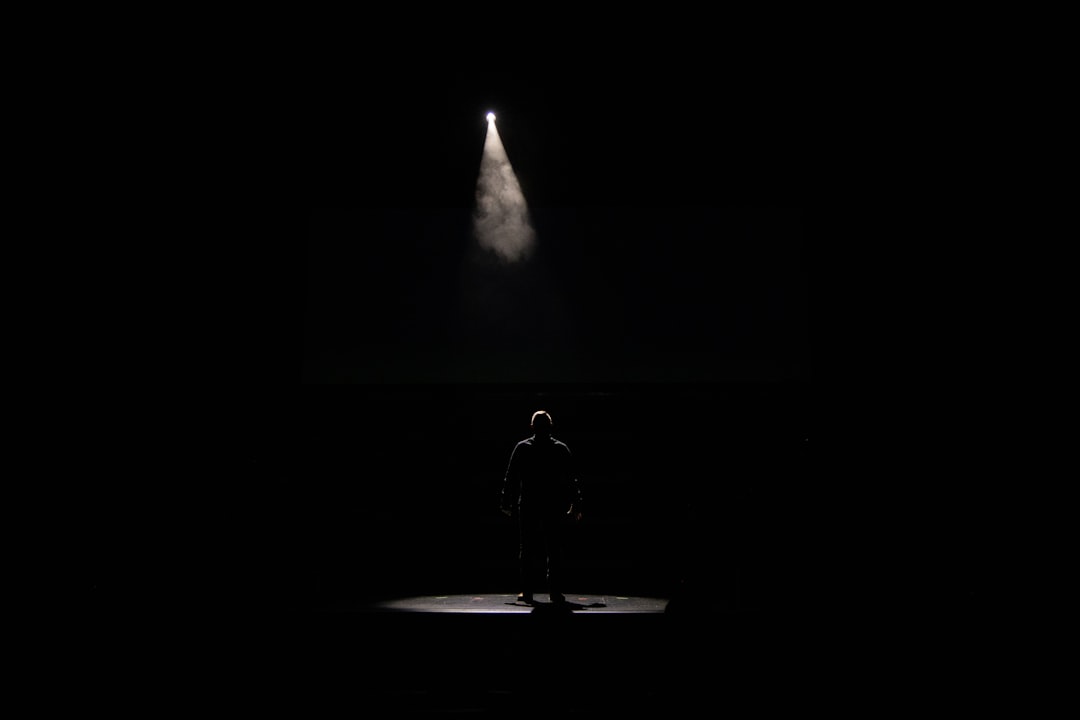
Your Brain Has a Spotlight. You're Not Controlling It.
Right now, your brain is processing 11 million bits of sensory information per second. Your eyes, ears, skin, nose, and internal organs are all firing data upstream in a constant flood. And of those 11 million bits, roughly 50 make it to your conscious awareness.
Fifty. Out of eleven million.
The thing choosing which 50? That's the reticular activating system, and if you don't know how it works, you're letting it run your life on default settings.
What the RAS Actually Is
The reticular activating system (RAS) is a dense network of neurons that runs from your brainstem through your thalamus and up into your cortex. It's the brain's gatekeeper, the filter between everything happening in the world and what you actually notice.
It's why you can sleep through the hum of a ceiling fan but wake instantly when someone whispers your name. It's why a mother can sleep through thunderstorms but snaps awake the moment her newborn makes a sound. The RAS has been tuned to prioritize her child. That information gets through; everything else gets screened out.
This system is ancient, and for most of human history it was calibrated for survival. Threat detection. Food. Danger. Tribal status. It scanned the environment for what mattered and filtered the rest.
The problem is that what your RAS treats as "what matters" is learned. Trained. And most men have never deliberately trained it.
You're Not Seeing Reality. You're Seeing Your Filter.
Here's the experiment everyone has experienced but never named properly: you decide to buy a specific car, and suddenly that car is everywhere. Same make, same color, on every road. Were those cars always there? Yes. But your brain wasn't looking for them before, so your RAS filtered them out.
That's the Baader-Meinhof phenomenon, and it's not a quirk. It's the system working exactly as designed.
Now apply that to your daily life. If your RAS is trained, through repetition and experience, to scan for threats and failures and reasons why things won't work, that's what you're going to find. You'll notice every slight, every obstacle, every reason to quit. You'll walk into a room full of opportunity and your brain will hand you the three problems worth worrying about.
Not because the opportunities aren't there. Because you didn't tell your filter to look for them.
Most men are running a default program. The RAS gets calibrated by whatever you expose yourself to most: news, complaints, social media comparison, old stories about who you are and what's possible. Garbage in. Garbage filtered. Every single day.
The Spotlight Is Programmable
This is where it gets useful. The RAS doesn't have opinions. It responds to what you reinforce as important. Feed it clearly defined targets through repetition and emotion, and it starts scanning for evidence that supports those targets.
Specificity matters. Vague intentions don't register. "I want to be healthier" gives the RAS nothing to grip. "I'm building a body that performs in the morning and performs at 45" gives it a target. Clarity is the command. Written language amplifies the signal. There's a reason the research on goal-setting consistently shows that written goals outperform mental goals by a significant margin. Writing fires multiple neural pathways simultaneously, repetition reinforces the pattern, and the physical act of writing tells your brain this is real and worth tracking. Your RAS starts looking. Emotion encodes priority. The system treats emotionally charged information as urgent. High stakes memories get filed and retrieved faster. This is why rote repetition of affirmations often fails but genuine, visceral visualization works differently. If you can make the desired outcome feel real, the RAS gets the signal that it's relevant. What you consume shapes the scan. This is the one most men ignore. Every input trains the filter. A morning scroll through headlines about economic collapse and political disaster is literally recalibrating what your brain treats as foreground. It's not abstract. The feed is rewiring the filter.The Man Who Runs on Default
Most men's RAS has been trained for them, not by them. School taught them to notice mistakes. The news trained them to scan for danger. Social media trained them to look for comparisons that leave them feeling behind. Relationships trained them to watch for signs of rejection. Work trained them to avoid failure.
The filter gets set in early life and then runs quietly for decades, shaping every perception, every decision, every reaction, without ever being examined.
This is why two men can walk into the same room and walk out with completely different experiences of it. Same room. Different filters. One sees obstacles, the other sees angles. One sees competition, the other sees collaboration. Neither is hallucinating. Both are just seeing through their respective filters.
The man who has consciously trained his RAS to scan for opportunity, patterns, connections, and evidence that his goals are achievable will find more of exactly that. Not because reality is different. Because his spotlight is pointed somewhere different.
Your Move
You don't fix the RAS in a week, but you can start steering it today.
- Write your targets down in specific, present-tense language. Not "I want to" but "I am building." Your brain processes present-tense statements differently than aspirational future ones. Do this every morning. The repetition is the point.
- Audit your inputs. Spend one week tracking what you consume: news, social feeds, conversations. For each major input ask what pattern is this training my brain to look for? Cut anything that's training the filter toward scarcity, threat, or comparison.
- Name what you're looking for out loud. Before a meeting, before a training session, before a hard conversation, say what a win looks like. Your RAS will start hunting for it. Athletes use this. Executives use this. Most men have never tried it.
- Create emotional anchors. Spend five minutes in the morning fully inhabiting the version of your life you're building. Not daydreaming. Actually engaging your nervous system, feeling the weight, the satisfaction, the reality of it. Emotion marks the target as worth tracking.
- Review your written goals before sleep. The brain consolidates information during sleep. End your day with the filter you want running during consolidation. What you review before bed is what your brain files as important.
The spotlight was always yours. Most men just never picked it up.
Pick it up.