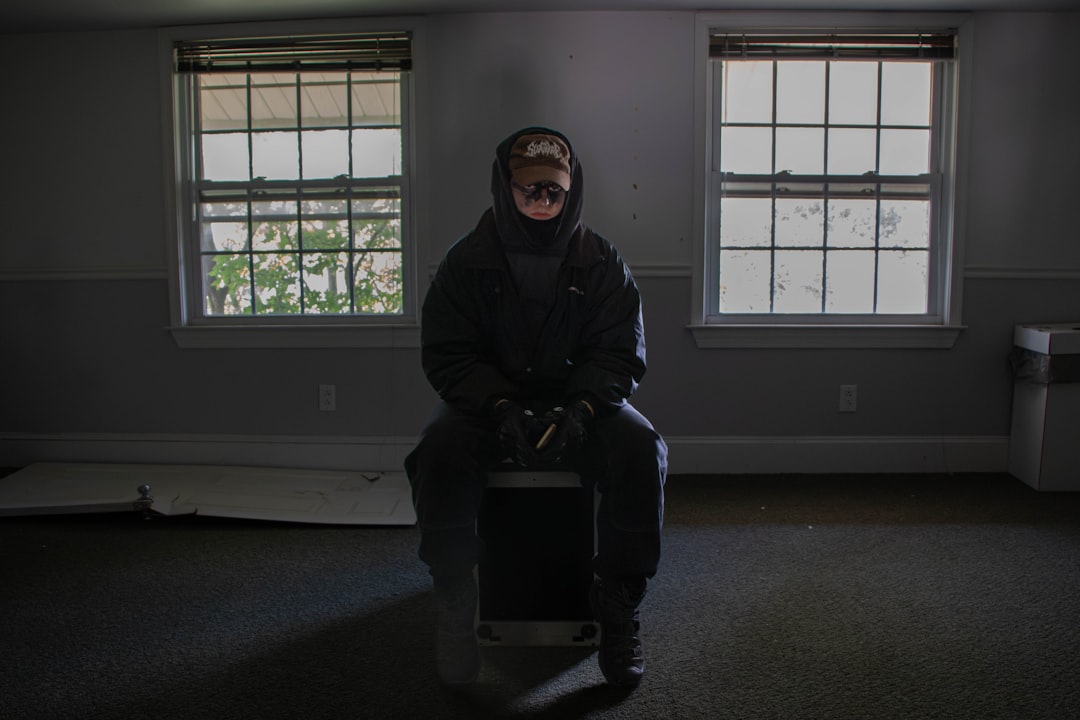
When was the last time you sat in complete silence? Not background-noise silence where the TV is off but your phone is buzzing. Not the silence between podcast episodes while you scroll looking for the next one. Real silence. No input at all. Just you and whatever's in your head.
If you can't remember, you're not alone. Most men fill every waking moment with noise — music in the car, podcasts during the commute, YouTube while cooking, the TV on while you fall asleep. We've built an entire infrastructure of stimulation to make sure we never have to be alone with our own thoughts. And that's exactly the problem.
WHY SILENCE TERRIFIES MEN
Silence is uncomfortable because it removes the buffer between you and yourself. With noise, you can outsource your attention. You can focus on someone else's story, someone else's problem, someone else's opinions. The moment the noise stops, your own stories, problems, and unresolved questions come rushing in.
That relationship you know isn't working. The career you've been coasting in. The goal you keep talking about but never start. The grief you never processed. The anger you buried instead of addressed. All of it lives in the silence, and that's why most men avoid it like it's a threat.
A study from the University of Virginia in 2014 found something remarkable: when given the choice between sitting alone with their thoughts for 15 minutes or giving themselves an electric shock, 67% of men chose the electric shock. They would rather experience physical pain than sit in silence with themselves. That number tells you everything about how terrified we are of what's underneath the noise.
The things you're running from in the noise are the exact things you need to face in the silence.
WHY MONKS HAVE KNOWN THIS FOR MILLENNIA
Every major spiritual tradition includes silence as a core practice. Christian monks observe the Great Silence. Buddhist monks practice noble silence during meditation retreats. Hindu yogis practice mauna — deliberate periods of not speaking. Sufi mystics enter khalwa — solitary retreat. These traditions didn't independently arrive at the same practice by accident. They arrived at it because it works.
Thomas Merton, the Trappist monk and writer, put it directly: "In silence we face and admit the gap between the depths of our being, which we consistently ignore, and the surface which is untrue to our own reality." Monks don't practice silence because they have nothing to say. They practice it because silence reveals what no amount of talking ever can.
You don't have to be religious or spiritual for this to apply. The mechanism is the same regardless of your worldview. When you remove external input, your brain is forced to process internal data. Unresolved emotions surface. Suppressed ideas emerge. Clarity happens not because silence adds something, but because it stops subtracting.
THE CREATIVE CASE FOR QUIET
The neuroscience of creativity supports what contemplatives have always known. The default mode network — the brain system that activates when you're not focused on external tasks — is where creative insights, self-reflection, and "aha" moments originate. This network fires during daydreaming, mind-wandering, and unstructured downtime. It cannot fully activate while you're consuming input.
Every time you plug in a podcast during a walk or scroll during a break, you suppress the default mode network. You're choosing consumption over creation. The idea you've been waiting for, the solution to the problem you've been grinding on, the connection you haven't seen yet — these live in the spaces between stimulation. And you keep filling those spaces with noise.
Einstein called it "combinatory play" — the loose, unstructured thinking that lets disparate ideas collide. He did his best thinking during long, silent walks. Darwin walked a specific gravel path in silence for hours. Beethoven (before he went deaf) would walk the Vienna woods in complete silence for entire afternoons. The greatest creative minds in history didn't brainstorm in meetings. They sat in the quiet and waited for what came.
WHAT COMES UP MIGHT SURPRISE YOU
The first few times you sit in silence, your brain will fight you. It will serve up anxiety. It will generate random to-do lists. It will tell you this is a waste of time and you should be doing something productive. That resistance is the exact reason you need to be there.
After a few sessions, the surface-level chatter begins to thin. Beneath it, you'll start to hear the quieter signals — the ones that have been drowned out by years of noise. An honest assessment of where your life actually is versus where you say it is. A recognition of what you actually want versus what you've been conditioned to want. Emotions you've been stuffing down because there was never a quiet moment to feel them.
This is not always pleasant. Sometimes what comes up in silence is grief, or rage, or fear. That's fine. Better to face it deliberately in fifteen minutes of stillness than to have it leak out sideways in your relationships, your temper, or your drinking habits for the next decade.
THE 15-MINUTE PROTOCOL
This is deliberately simple because complexity is the enemy of consistency.
Pick a time. Morning works best because your mind is less cluttered, but any consistent time works. Sit in a chair or on the floor. You don't need a meditation cushion or a special room. Close your eyes or leave them open — doesn't matter. Set a timer for fifteen minutes.
Do nothing. No phone within arm's reach. No music. No guided meditation. No mantra. No breathwork. Just sit in silence and let whatever comes up come up. You don't need to analyze it, fix it, or do anything with it. Just observe it. Fifteen minutes. That's it.
Your mind will wander constantly. That's normal and expected. You're not failing. You're observing the chaos of your own inner dialogue for the first time without distraction. The observation alone is the practice.
YOUR MOVE
Today, find fifteen minutes of complete silence. Not quiet — silence. No input of any kind. No phone, no music, no TV, no conversation. Just you and whatever lives in the gap. Do this for seven days and journal one sentence afterward about what came up. Not a paragraph — one sentence. At the end of the week, read those seven sentences. They'll tell you more about where you actually are than any self-help book you've read this year. The answers you've been searching for in podcasts, in mentors, in content — most of them are already inside you. You just can't hear them over the noise.