You track your macros. You hit your lifts. You take your supplements. You read your books. And then you stay up until 1 AM scrolling through your phone, get five and a half hours of sleep, and wonder why your energy is trash, your gains have stalled, and your focus is scattered by noon.
Sleep is not the thing you do after the work is done. Sleep IS the work. It is the single most powerful performance enhancer available to a human being, and most men treat it like an afterthought.
THE DATA THAT SHOULD SCARE YOU
Matthew Walker, a neuroscientist at UC Berkeley and author of Why We Sleep, has spent decades studying what happens when humans don't get enough of it. His findings are blunt. Men who routinely sleep five to six hours per night have testosterone levels comparable to men ten years older. Let that sit. You're aging yourself a full decade by staying up late.
A study published in JAMA in 2011 found that restricting young men to five hours of sleep for one week decreased their testosterone levels by 10 to 15 percent. These were healthy men in their twenties. The testosterone drop happened in seven days.
Beyond hormones, sleep deprivation impairs glucose metabolism, increases cortisol (the stress hormone that eats muscle and stores fat), weakens immune function, and reduces your ability to form new memories. The World Health Organization has classified night shift work as a probable carcinogen. Not a risk factor — a carcinogen. The research is not ambiguous.
"The shorter your sleep, the shorter your life. The leading causes of disease and death in developed nations — heart disease, obesity, dementia, diabetes, cancer — all have recognized causal links to a lack of sleep." — Matthew Walker
WHAT ACTUALLY HAPPENS WHILE YOU SLEEP
Your body doesn't just rest during sleep. It rebuilds. During deep sleep (stages 3 and 4 of non-REM sleep), your pituitary gland releases the majority of your daily growth hormone. This is when muscles repair, bones strengthen, and tissues regenerate. Skip deep sleep, and you skip recovery — regardless of how many protein shakes you drank.
During REM sleep, your brain consolidates memories and processes emotions. It takes the raw data from your day — the technique you practiced, the conversation you had, the concept you studied — and wires it into long-term storage. The skill you drilled at the gym today becomes permanent during tonight's REM cycles. Without adequate REM sleep, that learning degrades significantly.
Your brain also runs its cleaning cycle during sleep. The glymphatic system — discovered only in 2012 — flushes out metabolic waste products, including beta-amyloid, a protein associated with Alzheimer's disease. This system is almost completely inactive while you're awake. It runs at night. Every night you cut short is a night your brain didn't get cleaned.
THE "I'LL SLEEP WHEN I'M DEAD" LIE
This phrase gets treated like a badge of honor in hustle culture. It's not tough. It's self-destructive cosplay. The men who say this aren't outperforming anyone — they're degrading their cognition, their physique, their hormones, and their lifespan while bragging about it.
The data is clear: sleeping six hours or less on a regular basis increases your risk of all-cause mortality. You don't sleep when you're dead. You die faster because you didn't sleep.
Elite performers across every domain understand this. LeBron James sleeps 10 to 12 hours per day. Roger Federer sleeps 10 to 12 hours. Navy SEAL training emphasizes sleep recovery. Special forces operators know that sleep-deprived soldiers make fatal errors. This is not softness. It's operational readiness.
THE SLEEP HYGIENE PROTOCOL
Sleep hygiene is not a gimmick. It's environment design for the most important eight hours of your day. Here's the protocol, stripped of fluff.
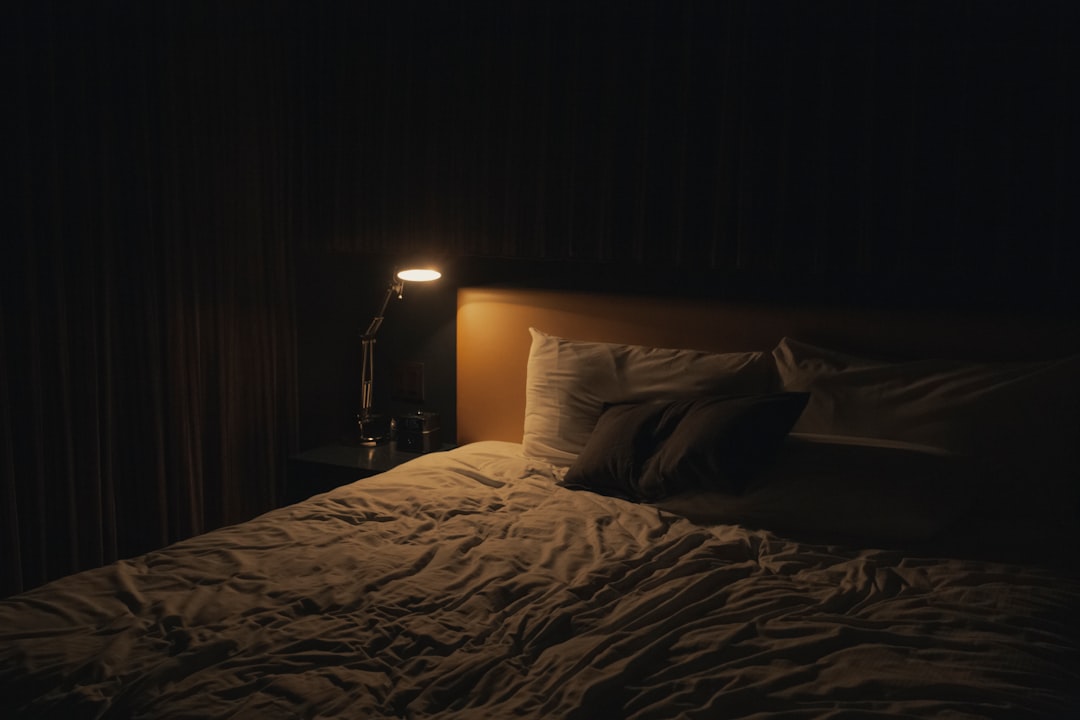
Dark room. Not dim — dark. Blackout curtains or a sleep mask. Any light hitting your retinas suppresses melatonin production. Even the LED on your charger matters. Cover it or unplug it.
Cool temperature. Your body needs to drop its core temperature by about 2 to 3 degrees Fahrenheit to initiate sleep. Keep your room between 65 and 68 degrees. This single adjustment improves sleep onset more than any supplement.
No screens one hour before bed. Blue light from phones, tablets, and laptops suppresses melatonin by up to 50 percent and delays its release by up to three hours. If you must use screens, use a blue light filter at minimum. But the better move is to read a physical book.
Consistent bedtime. Your circadian rhythm is a biological clock that runs on regularity. Going to bed at 10 PM on weekdays and 1 AM on weekends is like flying across time zones twice a week. Pick a bedtime. Hold it within 30 minutes, even on weekends.
No caffeine after 2 PM. Caffeine has a half-life of five to six hours. That 3 PM coffee still has half its caffeine active in your system at 9 PM. A quarter of it is still there at midnight. You might fall asleep, but the quality of that sleep is compromised.
Magnesium glycinate before bed. 300 to 400mg, taken 30 to 60 minutes before sleep. Magnesium activates the parasympathetic nervous system (your body's "rest and digest" mode) and regulates melatonin. Glycinate is the form that crosses the blood-brain barrier most effectively and doesn't cause the digestive issues that magnesium citrate does.
YOUR MOVE
Tonight, change one thing. Just one. Set a consistent bedtime and hold it. Put your phone in another room 60 minutes before that bedtime. Take 400mg of magnesium glycinate. Do this for seven consecutive nights and pay attention to how you feel on day eight. Your energy, your focus, your mood, your training performance — track all of it. The results won't be subtle. Sleep is the foundation everything else is built on, and most men have been building on sand.