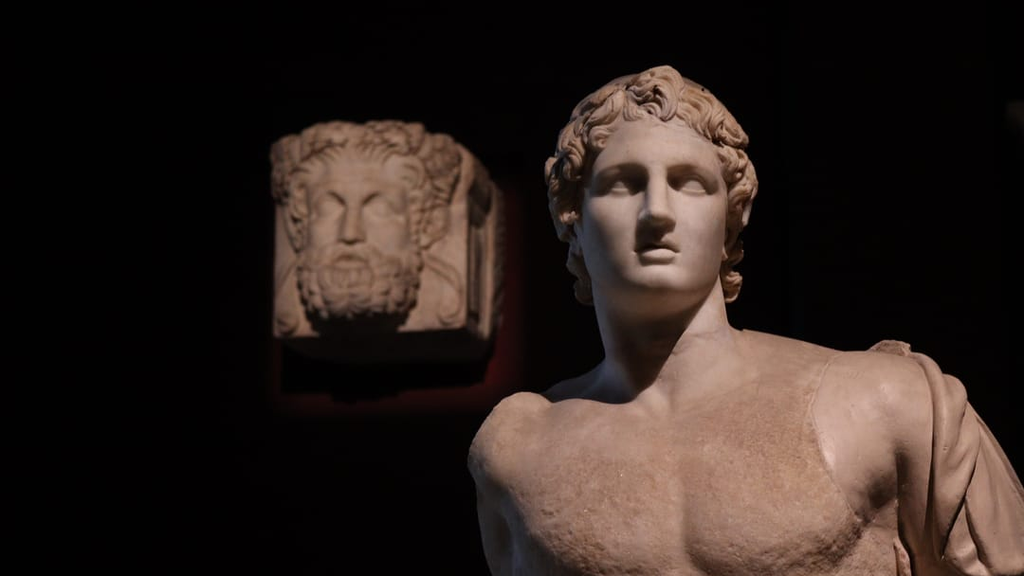
Marcus Aurelius ruled the Roman Empire — the most powerful man alive in his era — and spent his evenings writing private journal entries about controlling his temper, accepting what he couldn't change, and remembering that he would die. He didn't write Meditations for publication. He wrote it for himself. A manual for becoming the kind of man who could hold power without being destroyed by it.
Two thousand years later, that manual is more relevant than ever. Not because the world is harder than ancient Rome — it isn't — but because the mental challenges are the same. Anxiety. Anger. The need for control. The fear of loss. The temptation to react instead of respond. Stoicism isn't dusty philosophy. It's a daily operating system for men who want to lead their own lives instead of being jerked around by their emotions.
THE DICHOTOMY OF CONTROL
Epictetus, born a slave, taught the most fundamental Stoic principle: "Some things are within our power, while others are not." Within your power: your thoughts, your actions, your responses, your effort. Outside your power: other people's opinions, the economy, the weather, whether someone texts you back, what your boss decides, traffic.
Most suffering comes from violating this boundary. You rage at traffic — something completely outside your control. You obsess over what a coworker thinks of you — outside your control. You stress about whether the project will succeed — the outcome is outside your control, only the effort is yours. Every minute you spend on what you can't control is a minute stolen from what you can.
The practice: every time you feel stress, anger, or anxiety rising, ask one question. "Is this within my control?" If yes, act. If no, release. This isn't passive acceptance — it's strategic energy allocation. The Stoic doesn't care less. He directs his caring more efficiently.
"You have power over your mind — not outside events. Realize this, and you will find strength." — Marcus Aurelius, Meditations
NEGATIVE VISUALIZATION: PREMEDITATIO MALORUM
Seneca, one of the wealthiest men in Rome, practiced imagining the loss of everything he owned. Not because he was pessimistic, but because it served two purposes: it prepared him psychologically for adversity, and it made him appreciate what he had right now.
The modern version: spend two minutes each morning imagining the worst realistic outcomes of your day. The meeting goes badly. The deal falls through. Your car breaks down. The person you're interested in says no. Sit with each scenario. Feel the discomfort. Then ask: "Could I survive this? Could I handle this?" The answer is almost always yes. And now the anxiety loses its teeth, because you've already rehearsed the worst case and confirmed you'd be fine.
This also works in reverse. Imagine losing the things you take for granted — your health, your home, the people close to you. Not to be morbid, but to trigger genuine gratitude. The man who has mentally rehearsed loss treats the present with more attention and care than the man who assumes everything will last forever.
MEMENTO MORI: REMEMBER YOU WILL DIE
This is the Stoic practice that makes people uncomfortable, which is exactly why it works. Marcus Aurelius wrote: "You could leave life right now. Let that determine what you do and say and think." This isn't nihilism. It's radical prioritization.
When you remember that your time is finite, petty conflicts shrink. Grudges become absurd. Procrastination becomes theft — stealing from a limited supply. The argument you had with your friend yesterday? In the context of your mortality, is it worth carrying? The business you've been "planning to start" for three years? You don't have three more years to waste on planning. You might not have three months.
Memento mori isn't depressing. It's clarifying. It strips away the noise and leaves only what matters: your actions, your relationships, the work you're doing right now. The Stoics kept skulls on their desks. You can keep a note on your mirror. The message is the same: this ends, so make it count.
VOLUNTARY DISCOMFORT
Seneca regularly practiced sleeping on the floor, eating the simplest food, and wearing rough clothing — despite having access to the finest of everything. His reasoning: if you voluntarily experience discomfort regularly, you'll never fear its involuntary arrival. The man who has fasted isn't afraid of missing a meal. The man who has slept on the ground isn't devastated when his mattress breaks. The man who has been cold by choice isn't fragile when the heater dies.
This connects directly to the cold exposure and fasting we've covered elsewhere on this site. The Stoics figured out 2,000 years ago what modern neuroscience is now confirming: controlled exposure to discomfort builds resilience. It's not masochism. It's maintenance. You're stress-testing your own psychological infrastructure.
THE STOIC JOURNAL: MORNING AND EVENING
Marcus Aurelius journaled in the morning to prepare for the day. Seneca journaled at night to review it. The combination creates a feedback loop that accelerates self-awareness and growth.
Morning (2 minutes): Write down one thing you can't control today that you're tempted to worry about. Acknowledge it. Release it. Then write down one thing you can control — your effort, your attitude, your response to adversity. Commit to it.
Evening (3 minutes): Review the day. Where did you react instead of respond? Where did you waste energy on things outside your control? Where did you live according to your principles? What would you do differently? This isn't guilt. It's calibration. You're debugging your own operating system, one day at a time.
THE MODERN STOIC IN PRACTICE
Stoicism isn't about suppressing emotions. That's a common misread. It's about not being enslaved by them. The Stoic still feels anger — he just doesn't let it dictate his actions. He still feels fear — he just doesn't let it stop him from doing what needs to be done. He still feels grief — he just doesn't add to it with "this shouldn't have happened" or "it's not fair."
The modern Stoic is the man who gets cut off in traffic and takes a breath instead of laying on the horn. Who gets passed over for a promotion and channels the frustration into improving his work. Who gets dumped and uses the pain as fuel for becoming someone better, rather than spiraling into bitterness. He's not numb. He's in control. And in a world that's trying to make him reactive — through social media, news cycles, and manufactured outrage — that control is his greatest edge.
YOUR MOVE
Pick one Stoic principle — the dichotomy of control, negative visualization, memento mori, voluntary discomfort, or the morning/evening journal. Just one. Practice it daily for 30 days. Don't read another book about Stoicism. Don't watch another YouTube breakdown. Take the one principle and live it. At the end of 30 days, you'll have more emotional resilience, less reactive behavior, and a clearer sense of what actually matters. That's not theory. That's the same result men have reported for twenty centuries.