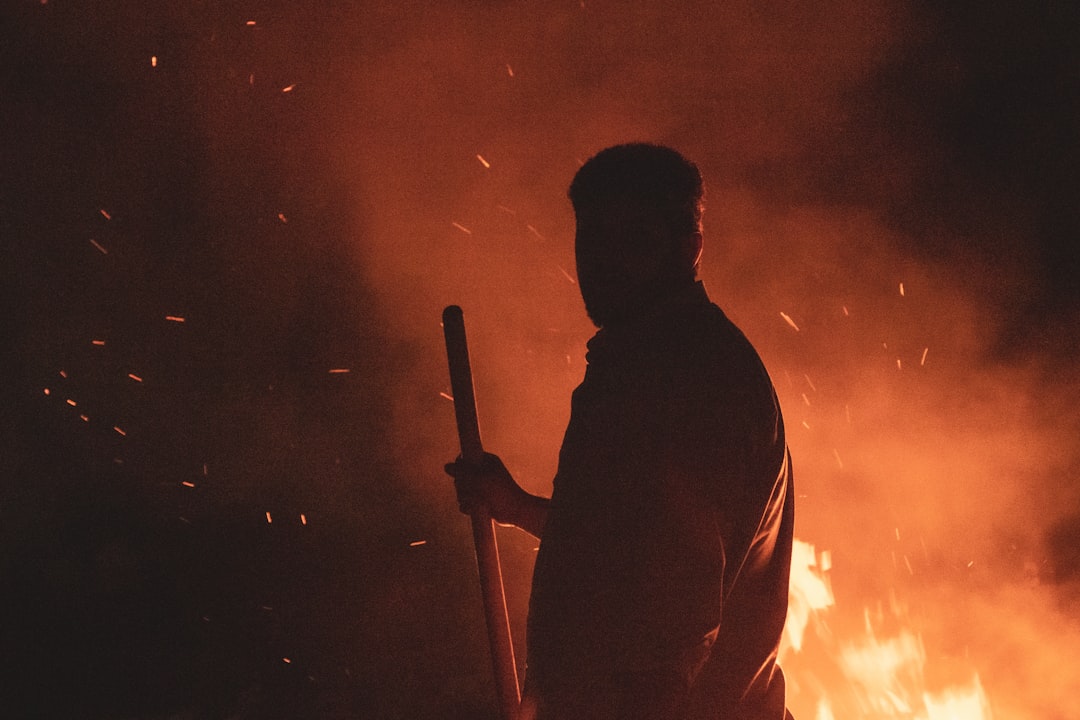
The Anger You Were Told to Kill
You were told to manage it. Breathe through it. Count to ten. Let it pass.
That advice has produced a generation of men who are either ticking time bombs or completely hollowed out. Neither extreme works.
There's a third option nobody talks about: your anger has a function. And the men who learn to read it, rather than suppress it or unleash it randomly, have access to something the rest don't.
The Problem with How Men Handle Anger
Most men do one of two things with anger.
The first group blows. They carry it around like a live wire, and eventually it connects with something it shouldn't. Their family takes it. Their coworkers take it. Random drivers take it. These men aren't evil. They just never learned what anger is for, so it comes out sideways.
The second group buries it. They meditated their way into numbness or got talked out of anger being acceptable at all. They're "calm." They also feel nothing. They don't stand up for themselves, don't protect anyone, don't get fired up about much. They're comfortable and empty.
The problem isn't the anger. It's the relationship to it.
What Anger Actually Is
Anger is a signal. Specifically, it fires when something you value is being threatened or violated.
That's it. That's the whole function.
When someone disrespects your wife in public and you feel your chest tighten, that's not a problem to manage. That's your system telling you exactly what matters to you and that it's under threat. When a situation at work feels wrong in a way you can't articulate, and it keeps coming back as a slow burn, that's your values sending you a message you haven't decoded yet.
Therapist and Jungian analyst James Hollis writes about anger as the energy of the soul in protest. Not chaos. Protest. The signal that a boundary, internal or external, is being crossed.
The Stoics understood this too. Marcus Aurelius didn't advocate for passivity. He advocated for response instead of reaction. The anger still comes. What you do with it is the whole question.
Sacred Anger vs. Reactive Rage
Here's the distinction worth making.
Reactive rage is unconscious. Something triggers you, and before you've processed it, you're already responding. It's often disproportionate to what actually happened because it's carrying everything you've never dealt with. It burns bridges and leaves wreckage. It feels powerful in the moment and hollow ten minutes later. Sacred anger is different. It's clean. It comes from a clear place. You know exactly why you're angry and what it's pointing at. It doesn't leak everywhere. It doesn't apologize for existing. It moves in one direction, toward something that matters.The man who fires someone with calm directness because they kept undermining the team isn't doing it from rage. He's doing it from a place that says this isn't acceptable. The man who tells his father he won't be spoken to a certain way anymore, steadily, without shaking, is running on that same fuel.
Sacred anger isn't loud. It's decided.
The Spiritual Dimension
Every major spiritual tradition has an account of righteous anger. Moses smashing the tablets. Jesus overturning the tables in the temple. The Hindu god Shiva's cosmic destruction as the precursor to creation. These aren't cautionary tales about losing control. They're portraits of something sacred being violated and responding accordingly.
The warrior archetype exists in virtually every culture's spiritual framework for a reason. Masculine energy includes the capacity to fight for what matters. That capacity doesn't disappear because you started meditating. Strip it out and you don't get a more evolved man. You get a less complete one.
Robert Bly, in Iron John, talks about what happens when men have the "fierceness" trained out of them by culture, family, or religion. They become soft in a way that helps no one. Not their partners, not their children, not themselves. Bly's antidote wasn't violence. It was reconnecting with the inner warrior who protects something real.
That warrior runs on anger. Directed. Purposeful. Sacred.
Reading Your Anger as Signal
If you want to use anger instead of being used by it, start treating it as information.
When you feel it rise, don't push it down and don't fire it off. Pause long enough to ask: what is this protecting?
Usually the answer is one of three things.
A boundary that's been crossed. Someone has treated you, or someone you care about, in a way that violates your values. The anger is correct. The question is how to respond.
A truth you haven't spoken. Chronic low-level anger is often the cost of not saying what needs to be said. The anger isn't about the present moment. It's the buildup of resentment from swallowing things you should have addressed.
A direction you're being pointed. Sometimes anger about your life circumstances is the most honest signal you'll get that something has to change. The job that makes you miserable, the relationship draining you, the version of your life that looks fine from the outside and feels wrong from the inside. Anger can show you the truth faster than two years of journaling.
Your Move
This week, catch anger before you either explode or suppress it. When you feel it come up, ask yourself three questions:
- What is this protecting? (What value, boundary, or truth is under threat?)
- Is this proportionate? (Is this actually about right now, or is it carrying old material?)
- What's the right response? (Not reaction. Response. What would the man you're becoming do with this information?)
The goal isn't to be calmer. The goal is to be more conscious. A conscious man with access to his anger is one of the most powerful forces you'll ever encounter. He doesn't lose it over small things. When something genuinely matters, he's completely unmovable.
That kind of anger isn't something to kill. It's something to understand.