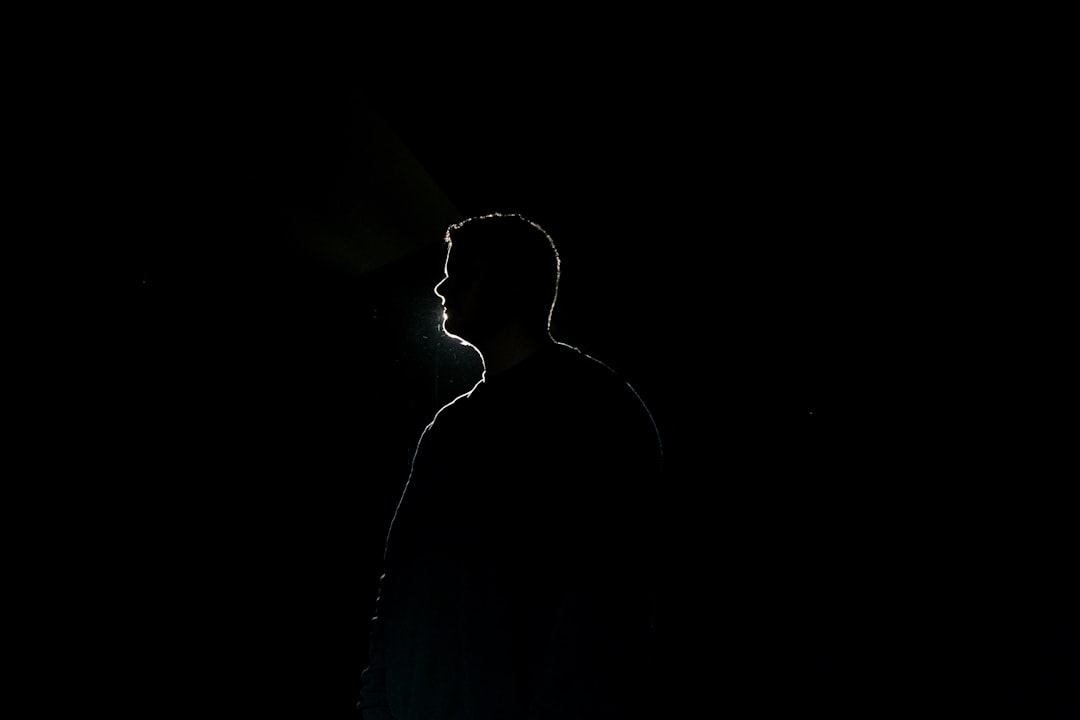
The Witness: Become the Observer of Your Own Mind
You are not your anger. You are not your anxiety. You are not the voice in your head telling you that you're behind, that you're not enough, that everyone else has it figured out.
Most men never actually believe that. They live their whole lives inside their thoughts and emotions, completely merged with whatever passes through. The relationship falls apart and they don't feel sadness -- they become it, entirely. The boss disrespects them in front of the team and the rage doesn't just come up, it takes over. There's no space. Just reaction.
This is the opposite of spiritual maturity. And one of the oldest practices in human history addresses it directly.
It's called developing the Witness.
The Storm vs. The Sky
Think about your worst moment from last week. A flash of rage. A spiral of anxiety at 2am. A craving that felt physically urgent.
Now ask yourself: who was watching that happen?
Something in you noticed the anger. Something observed the worry. There was a part of you that saw the whole storm move through, even if you got swept up anyway. That observer, that quiet aware presence sitting behind every experience, is what spiritual traditions call the Witness.
The philosopher Ken Wilber put it plainly: you can be aware of your emotions, which means you cannot be those emotions. They're objects in your awareness. You are the awareness itself.
Classical yoga philosophy has a word for this: Purusha. Pure consciousness. The unchanging awareness that watches every thought, sensation, and breath pass through without being controlled by any of it. It's not detachment. It's a completely different relationship to your own inner life.
The Witness doesn't make you cold. It makes you free.
Why This Is Specifically Hard for Men
Men are trained to act. React. Suppress or explode. What almost no one teaches us is to observe.
When something threatens us, the nervous system floods fast. Testosterone amplifies that immediate response. So by the time most men hit their thirties, they've spent years practicing one of two patterns: push the feeling down, or let it run the show. Both patterns share the same root problem. No separation between the man and the mental event.
Psychologists call this cognitive fusion, and Acceptance and Commitment Therapy has built a substantial body of evidence around reversing it. When you're fused with a thought, it stops feeling like a thought and starts feeling like reality. The thought "I'm going to fail this" doesn't feel like a passing mental event. It feels like a certainty.
The Witness knows the difference between a thought and the truth.
That gap is where your actual freedom lives.
What the Witness Feels Like When It Shows Up
It's subtle at first. You're in a tense conversation and someone says something that would normally light you up. But instead of immediately reacting, there's a half-second pause. Something in you clocks the heat rising before it takes over. You have a choice.
That's the Witness coming online.
Ram Dass, who spent decades studying this across Eastern and Western traditions, described it as "simple awareness -- the part that is observing without preference." Not analysis. Not detachment. Pure presence with the experience, without being consumed by it.
Viktor Frankl wrote about finding this gap even inside a Nazi concentration camp. He called it "the last of the human freedoms." The space between what happens to you and how you respond. The Witness is what makes that space possible.
How to Build This Capacity
Name what you're experiencing rather than living inside it. When anxiety hits, try: "I notice there's anxiety here." Not "I am anxious." The grammatical shift feels small. The neurological effect over time is significant. You're training your brain to treat thoughts and emotions as events to observe, not truths to inhabit. Sit with the noise without fixing it. Five minutes every morning. Sit still, watch whatever comes up, and don't try to change it. You're not practicing to feel calm. You're practicing being the one who watches. The storm isn't the problem. Your identification with it is. Ask one question. "Who is aware of this?" When you're angry, ask it. When you're proud, when you're afraid, when the craving hits. This single question has anchored Advaita Vedanta practice for centuries. It points consciousness back at itself and creates a moment of separation between the experiencer and the experience.These aren't tricks. They're reps. You're building a new relationship with your own mind, and like anything that actually changes you, it takes time.
Why This Is the Foundation
The Witness isn't just spiritual theory. It's what every other practice in this space is built on.
You can't do shadow work without it. You need the observer to examine the dark material without being consumed by it. You can't practice non-attachment without it. You can't hold discipline under pressure without the gap between what you feel like doing and what you choose to do. Even the most basic anger management is just a crude attempt at what the Witness provides naturally.
Men who develop the Witness stop being controlled by their cravings without becoming numb. They stop being hijacked by emotion without going cold. They're present with everything and run by nothing.
That's not some enlightened spiritual state. That's just a man who has learned to operate from something deeper than his reactions.
Your Move
This week, catch yourself saying "I am [emotion]" and replace it with "I notice [emotion] is present."
That's it. Just that. Do it for seven days and pay attention to what shifts.
The anger doesn't disappear. The fear doesn't vanish. But you stop being their passenger. You start becoming something quieter and more stable. The one who was watching all along.