The Night Belongs to You: Build an Evening Ritual That Actually Closes the Day
Most men are great at starting the day. They wake up early, move their body, set an intention. But by 9pm they're face-down in their phone, cortisol spiking from a highlight reel they didn't ask for, and wondering why they can't sleep.
The evening matters just as much as the morning. Maybe more.
What you do in the two hours before bed determines the quality of your sleep, your testosterone production, and who you wake up as tomorrow. Most men have no evening ritual. They have an evening collapse. There's a difference.
Why the Evening Is Sacred Ground
Here's the biology that makes this serious:
Your body starts producing melatonin around sunset, roughly 90 minutes after darkness. But that process only happens when blue light stops hitting your retinas. Most men are staring at screens until the moment they close their eyes, which tells the brain it's still midday. Melatonin drops. Cortisol stays elevated. Sleep becomes shallow and broken.
And here's the part that gets ignored: the bulk of your testosterone is produced during deep sleep. A 2019 study published in JAMA confirmed that men who consistently slept under six hours had testosterone levels 10 to 15 percent lower than men sleeping seven to nine. The evening ritual isn't self-care. It's hormone optimization.
Beyond the biology, there's something older at play. Every traditional culture built ceremony around sunset. Ancient Romans had the hora nona, a period of rest and reflection as the day closed. The Japanese practice of yoku (bathing culture) was tied to evening release, not just hygiene. Indigenous peoples across continents marked dusk as a liminal time, a crossing-over, a moment worthy of attention.
We've traded all of that for Netflix autoplay.
Close Your Loops Before You Sleep
The brain is a bad container. It keeps active tabs open on everything unfinished, and those tabs run in the background all night if you don't close them manually.
The single most powerful thing you can do before bed is a brain dump. Not journaling in the deep emotional sense. Just a five-minute list: everything unresolved, everything you're thinking about, every task hanging in the air. Write it down somewhere it will be waiting for you tomorrow.
This works because of something called the Zeigarnik Effect: the brain holds incomplete tasks in working memory to avoid forgetting them. Once they're written, the brain releases its grip. You're signaling, "I've got this. I can let go now."Some men add a daily review. Three wins from the day. One thing you'd do differently. One thing you're grateful for. It doesn't have to be elaborate. Even two minutes of honest review builds self-awareness faster than months of passive living.
This isn't soft. It's how high performers process and iterate. Stoic philosophers like Marcus Aurelius ended every day with written examination of their conduct. The Meditations are literally that: his private evening review, never meant to be published.
Light, Temperature, and the Body's Wind-Down Signal
Your nervous system follows environmental cues whether you're paying attention or not. Most men's evenings are a sensory mismatch: bright overhead lights, loud content, high-stakes news, stimulating conversations, cold drinks, and constant notifications. Every one of those signals tells the body to stay alert.
Flip the script deliberately.
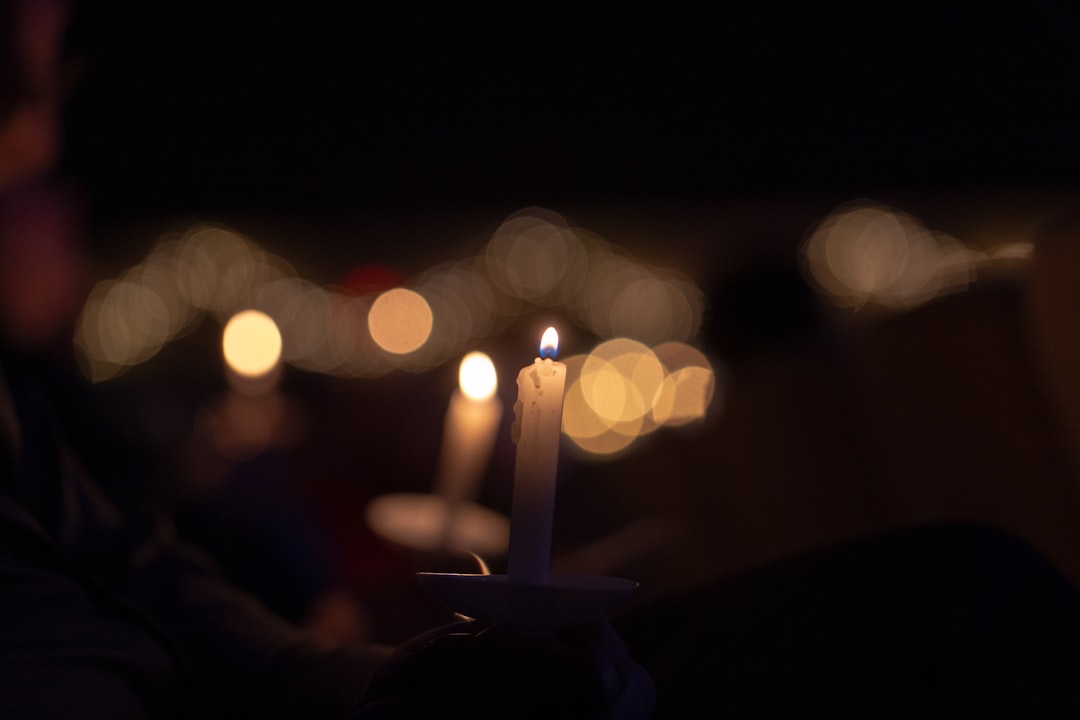
Dim the lights two hours before you want to sleep. If you can, shift to warm amber tones. Lamps over overheads. Candlelight if you're willing. Research from Harvard Medical School found that blue light wavelengths suppress melatonin twice as long as comparable warm light. The phone screen in your hand is radiating the same wavelength as midday sunlight.
Drop the temperature in your bedroom. The body's core temperature needs to fall one to two degrees Fahrenheit to initiate deep sleep. A cool room, a hot shower that drops your core temp as you exit, or even cold feet can accelerate that transition.
Cut the stimulation. Not everything, not monastically. But make a deliberate stop time for anything that activates your threat response: news, arguments, social media comparison loops, work emails. The brain can't tell a work email at 10pm from an actual threat. Cortisol fires the same either way.
Movement and the Body's Closing Ceremony
Evening movement is different from training. You're not trying to build. You're trying to close.
Ten minutes of slow walking, light yoga, or deliberate stretching activates the parasympathetic nervous system. This is the rest-and-digest mode, the counterpart to the fight-or-flight state most men never fully exit. Breathe slowly. Let the muscles release. You're signaling to your body that the day's demands are over and it can begin recovery.
Some men do this as a walk. Outside if possible. The exposure to natural darkness and cool air reinforces the circadian signal. Others do a few minutes of mobility work on the floor. The content matters less than the intention behind it: you are physically marking the end of the active day.
This is what ritual means. Not magic. Not mysticism. A deliberate action that carries meaning because you've assigned it meaning. Every religion in the world uses this principle because it works.
The Spiritual Architecture of Ending Well
There's something deeper than the science here, though the science is real enough.
How you end the day determines who shows up tomorrow. A man who drifts to sleep in passive consumption mode wakes up reactive. A man who closes his day with intention wakes up with direction.
The evening ritual is an act of sovereignty over your own time. The world will fill every minute you don't claim. It will pipe content into your eyes until you go unconscious. Your evening is the easiest slot for the world to steal because you're tired, your willpower is low, and you've earned some kind of release.
The ritual says: this time is mine. I'm ending this day as a man, not as a consumer.
It doesn't have to be long. Thirty minutes is enough. Some nights it'll be fifteen. The practice isn't perfection. It's the consistent return to intention.
What you do in those minutes matters less than the fact that you show up to them. One man's practice is prayer. Another's is reading something that builds him. Another's is playing a few minutes of music or sitting in silence before bed. The form is flexible. The commitment to closing the day consciously is not.
Your Move
Start small. Pick one anchor:
- The brain dump: Five minutes, pen and paper, before you touch your phone after dinner. Write down everything unfinished and let your brain release it.
- The light cut: At 9pm (or two hours before your target sleep time), switch to lamps or candles. No overhead lights. Notice the shift in how you feel inside twenty minutes.
- The closing walk: Ten minutes outside after dinner. No music, no podcast. Just you and the cooling air and the darkening sky. Let the day settle.
Start with one. Do it for a week. When it's automatic, add another.
Morning rituals get all the attention in self-improvement circles. But the evening ritual is quieter, older, and in some ways more important. The morning is for momentum. The evening is for integration. You can't keep pouring in without creating space to let it land.
Close the day like you mean it. Tomorrow depends on it.