Second-Order Thinking: Why Most Men Lose Before They Start
Most men only see the first move. They take the job because it pays more. They skip the workout because they're tired today. They say yes to the easy thing and no to the hard thing. Then they're surprised when life doesn't add up.
That's first-order thinking. And it's quietly destroying your results.
What Second-Order Thinking Actually Is
First-order thinking asks: What happens if I do this?
Second-order thinking asks: And then what?
It's not complicated. It's just rare. Charlie Munger built most of his fortune on this one idea. He called it "thinking through the full consequences" -- following a decision past its obvious outcome into the ripple effects nobody else bothers to see.
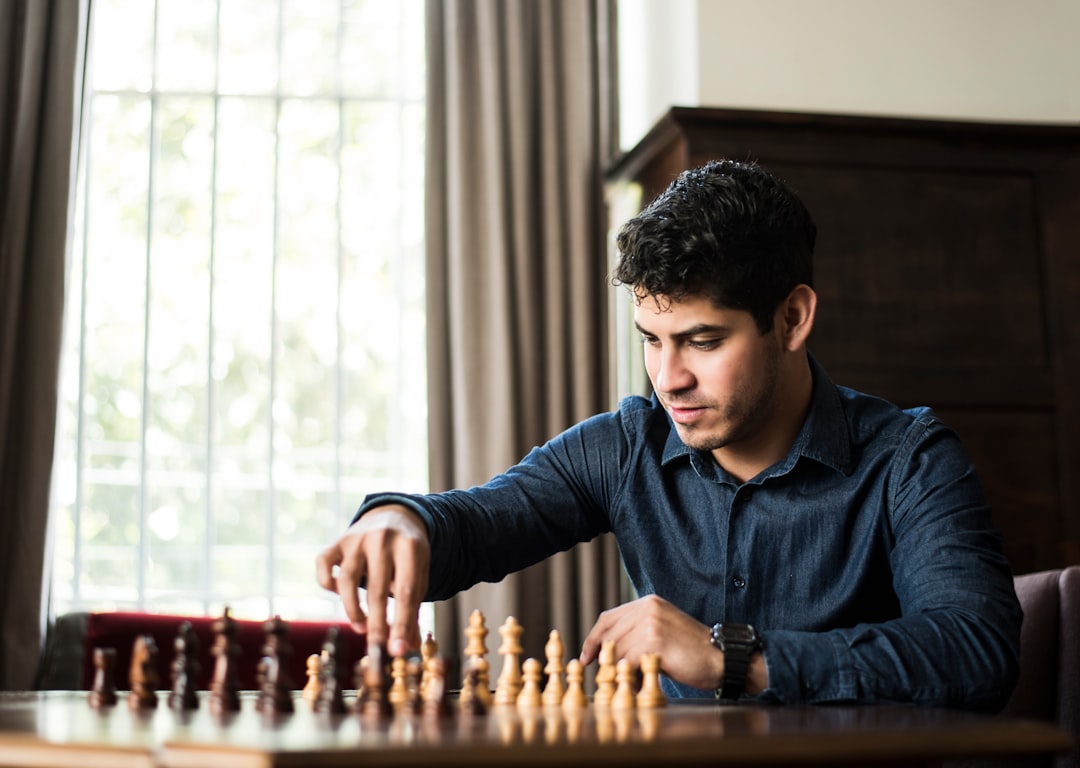
The chess player who's dangerous isn't the one thinking three moves ahead. It's the one who already knows which positions to avoid five moves from now. The board looks simple to everyone else. To him, it's a map.
You can build that same map for your own life.
The Tax on Every Decision
Every choice you make comes with a second-order cost you're probably not accounting for.
The extra hour of Netflix? First order: you relax. Second order: you sleep worse, your morning is sluggish, you skip the gym, you're behind on work by noon. One hour of TV costs you a whole day of output.
The extra drink? First order: you loosen up. Second order: your testosterone takes a measurable hit, your sleep is fragmented, your willpower is depleted the next morning, and the decision you make with a foggy head costs you more than the drink ever gave you.
Quitting a hard thing early? First order: the discomfort stops. Second order: you confirmed to your nervous system that you quit when things get hard. You'll quit again faster next time. The cost isn't just today's rep -- it's your future identity.
None of this is doom-and-gloom. It's just seeing clearly. The man who sees the second order isn't paralyzed by it. He just makes different choices.
Where Men Get Blindsided Most
Three areas where first-order thinking costs men the most:
Health. The body is the longest game there is. Every skipped workout, every processed meal, every night of bad sleep has a compounding second-order effect on your testosterone, your cognitive function, your cardiovascular baseline, your longevity. The first-order payoff of comfort is tiny. The second-order cost of consistent comfort is your vitality at 45. Relationships. Most relationship damage is first-order reactive. You snap because you're stressed. You go quiet because the conversation got hard. You avoid the difficult talk because it feels easier right now. Second-order: you create distance, breed resentment, train the other person to expect less from you. One avoided conversation can cost you six months of closeness. Money. The obvious one, and still widely ignored. The impulse buy. The expensive habit. The short-term cash grab instead of the boring long position. Wealth is almost entirely a second-order game. The guys who build it are playing a different match than the guys who can't figure out why they're broke despite a solid income.How to Train This Skill
Second-order thinking isn't a personality trait. It's a practice. Here's how to install it.
Run the "and then what?" drill. Before any meaningful decision, ask it once out loud. Not twice, not five times -- just once. I want to skip the workout. And then what? The answer usually tells you everything you need to know. Expand your time horizon deliberately. First-order thinkers live in the next hour. Second-order thinkers live in the next season. Pick one area of your life -- training, money, a relationship -- and ask yourself what three months of consistent choices looks like on the current path. The picture clarifies fast. Study decisions in hindsight. Look at your last three bad outcomes. In each case, trace back to the decision. Now trace forward: what was the second-order outcome that was actually predictable? Do this ten times and you'll start seeing the patterns before they happen. Use inversion as a forcing function. Instead of asking "what do I want to happen?" ask "what outcome am I trying to avoid?" Then work backward. Munger called this mental habit essential. Most men never try it."It is not enough to think about difficult problems one way. You need to think about them forwards and backwards." -- Charlie Munger
The Men Who See Further
There's a certain type of man who seems to make consistently good decisions. He doesn't panic. He isn't impulsive. When everyone else is chasing something, he's already thought through where that road ends.
He's not smarter than you. He's just slower in the right places.
He pauses before reacting. He runs the second move before taking the first. He treats today's discipline as a deposit into tomorrow's freedom. And he does this not because he's disciplined by nature, but because he's trained himself to see further.
That's what second-order thinking builds over time: the ability to see the board others can't read.
Your Move
Pick one decision you're facing this week -- anything with some weight to it. Run the full sequence:
- What's the immediate outcome if I do this?
- What's the second-order outcome? The ripple?
- Am I okay with both?
Don't overthink it. One round of "and then what?" takes thirty seconds. But over time, that thirty seconds separates the men who get where they intended from the ones who wonder where the years went.
See the move. See the next one. Act.